

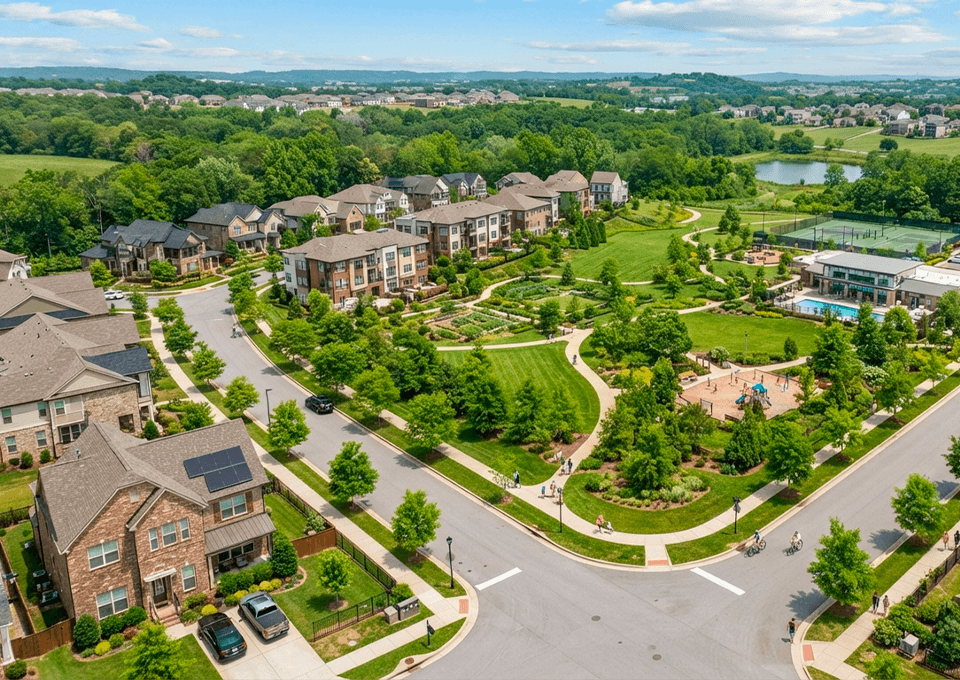
Building a well-conceived residential development is only the first half of creating lasting value. The second half, often less visible and less celebrated, is the ongoing stewardship required to maintain that value over subsequent years and decades. Examining how a development like Terre d’été is maintained after its initial completion offers a practical illustration of what genuine long-term stewardship looks like in practice, beyond the initial design and construction phase.
Stewardship as a distinct discipline from development
Development and stewardship, while related, require different skills and different organisational capabilities. Development involves the finite, project-based work of conceiving, designing, and constructing a new asset. Stewardship involves the ongoing, open-ended work of preserving and enhancing that asset’s value indefinitely, a fundamentally different kind of undertaking that requires sustained organisational commitment well beyond any single project’s completion. Recognising this distinction explicitly, rather than assuming that development success automatically carries over into equally strong long-term stewardship, is itself an important first step toward building genuine, durable stewardship capability.
Groups that excel at development don’t automatically excel at stewardship, and vice versa; the two disciplines call for different operational structures, different types of expertise, and different measures of success. A group like Apavou Group, which has sustained a long-term presence in the Mauritian market across multiple projects, has necessarily had to build genuine competency in both disciplines, rather than treating stewardship as a secondary consideration relative to the more visible work of new development.
Preventive maintenance versus reactive repair
One of the clearest markers of genuine stewardship discipline is the balance between preventive maintenance and reactive repair. Preventive maintenance, regularly scheduled inspection and upkeep of building systems, landscaping, and shared infrastructure, is less visible and less immediately satisfying than addressing a visible problem after it emerges, but it is considerably more cost-effective over the long run, since catching and addressing minor issues early prevents them from developing into more serious, expensive problems.
For a development like Terre d’été, this preventive approach might include regular landscaping maintenance to preserve the quality of shared green spaces, proactive inspection and maintenance of shared infrastructure like drainage systems (particularly important given Mauritius’s exposure to heavy seasonal rainfall), and periodic refresh of common area finishes before visible deterioration affects residents’ overall perception of the development’s quality.
Stewardship of shared infrastructure beyond individual units
While much of the visible discussion around residential stewardship focuses on landscaping and common building finishes, the less visible shared infrastructure, drainage systems, electrical distribution networks, water supply infrastructure, and road surfaces within the development, often represents the most consequential, and most easily neglected, dimension of ongoing stewardship. Failures in this less visible infrastructure tend to have outsized consequences when they do occur, and the cost of proactive maintenance is almost always considerably lower than the cost of reactive repair once a failure has already caused disruption or damage. Developments that build genuine expertise and dedicated attention toward this less visible infrastructure, rather than focusing stewardship resources disproportionately on the more visible, aesthetically prominent elements of a community, tend to avoid the kind of disruptive, costly infrastructure failures that can significantly undermine resident satisfaction and a development’s broader reputation.
Funding mechanisms for ongoing stewardship
Genuine stewardship requires adequate, sustainable funding mechanisms, typically through homeowner association fees or equivalent structures for a residential development like Terre d’été, sized realistically to cover both routine maintenance and periodic larger capital expenditures (roof replacement, infrastructure upgrades, major landscaping renewal) that inevitably arise over a development’s multi-decade lifecycle.
Underfunding these mechanisms, whether to keep initial fees attractive to prospective buyers or due to insufficiently realistic long-term capital planning, is a common failure mode that undermines stewardship even when the underlying intent to maintain a development well is genuine. Developers with a long-term stewardship orientation tend to build more conservative, realistic funding assumptions into these mechanisms from the outset, even at the cost of somewhat higher ongoing fees, recognising that adequate funding is a prerequisite for the preventive maintenance approach that preserves long-term value.
Responsive governance and community engagement
Stewardship also has a governance dimension, ensuring that residents have meaningful channels to raise concerns, that maintenance priorities reflect genuine community needs rather than purely administrative convenience, and that the overall management approach remains responsive to how the community’s needs evolve. This might involve regular resident meetings, transparent reporting on maintenance activities and associated costs, and structured processes for residents to propose and prioritise potential improvements to shared spaces.
This responsive governance approach helps maintain resident trust in the stewardship process, which in turn supports continued willingness to fund adequate maintenance mechanisms, a virtuous cycle that reinforces itself over time, in contrast to developments where opaque or unresponsive management erodes resident trust and, eventually, willingness to adequately fund ongoing maintenance.
Adapting stewardship practices as the development ages
The stewardship needs of a development evolve as it ages; a newly completed development requires different maintenance priorities than one approaching two or three decades of age, where major building systems and infrastructure may be approaching the end of their originally intended lifespan and require more substantial renewal rather than routine maintenance alone. Effective stewardship anticipates this evolution, building long-term capital planning that accounts for these larger renewal cycles well before they become urgent, rather than reactively scrambling to fund major infrastructure replacement only once existing systems have already begun to fail.
Technology’s growing role in stewardship practice
Property management technology, digital systems for tracking maintenance schedules, managing resident communication, and monitoring building system performance, has increasingly become a valuable tool supporting more effective stewardship, allowing management teams to move from purely reactive, memory-dependent maintenance tracking toward more systematic, data-informed approaches. For a development of the scale of Terre d’été, adopting these tools can help ensure that preventive maintenance schedules are consistently followed, that resident concerns are tracked and resolved systematically rather than informally, and that longer-term capital planning is grounded in accurate, up-to-date information about the actual condition of shared infrastructure rather than outdated assumptions. Groups that invest in this kind of systematic tracking capability, rather than relying purely on the informal institutional memory of individual property managers, build stewardship practices that remain robust even through staff transitions, since the underlying record of a development’s maintenance history and condition persists independently of any single individual’s tenure.
Building institutional capability specifically for stewardship
Genuine stewardship at scale, across a growing portfolio of developments rather than a single project, requires dedicated organisational capability, not simply an extension of the same team responsible for new development. This often means building distinct property and community management functions, staffed and trained specifically for the ongoing, operational discipline that stewardship requires, rather than assuming that development expertise automatically translates into equally strong ongoing management capability.
Groups that under-invest in this distinct stewardship capability, treating it as a lower-priority function relative to the more visible work of new development, often see the quality of their maintained developments diverge noticeably from the quality of their newest projects, a pattern that erodes the group’s broader reputation over time, since prospective buyers and tenants evaluating a new development reasonably look to how the group’s existing developments have been maintained as an indicator of what to expect going forward.
Weathering external shocks through stewardship discipline
Mauritius’s exposure to cyclones and broader climate-related risks means that stewardship discipline is periodically tested by acute external shocks, such as a severe storm that damages shared infrastructure, for instance, requiring both immediate emergency response and a longer-term recovery and rebuilding process. Developments maintained with genuine stewardship discipline, including adequate insurance coverage, emergency response planning, and pre-established relationships with contractors capable of responding quickly to storm damage, tend to recover from these shocks considerably faster than developments where stewardship has been treated as a lower priority, minimising the disruption to residents and preserving the development’s underlying value more effectively through these inevitable periodic challenges.
Stewardship as a reflection of broader organisational values
Ultimately, the quality of stewardship applied to a development like Terre d’été reflects broader organisational values that extend across a group’s entire portfolio, rather than being specific to any single project. A group that genuinely values long-term relationships over short-term transactions, that takes pride in the ongoing quality of its completed work rather than viewing a project as finished once units are sold, tends to apply consistent stewardship discipline across its full portfolio rather than varying dramatically in quality from one development to another. This consistency is itself a valuable signal to prospective buyers and tenants evaluating a group’s newest projects, since a demonstrated pattern of genuine stewardship across older developments provides considerably more credible evidence of what to expect than promises made about a not-yet-completed new project alone.
Measuring stewardship success
Unlike development success, which can be measured relatively directly through metrics like sales absorption or initial occupancy, stewardship success is better measured through longer-term indicators, sustained resident satisfaction, resale values that hold up well relative to comparable developments, and the physical condition of shared infrastructure relative to the development’s age. These indicators require patience to observe, since genuine stewardship performance only becomes fully apparent over a multi-year or multi-decade horizon, well beyond the timeframes typically used to assess a development’s initial success.
Conclusion
Stewardship in practice, as illustrated by how a development like Terre d’été is maintained over time, requires a distinct organisational discipline from the initial development process itself, preventive rather than purely reactive maintenance, adequately funded and realistically planned capital reserves, responsive governance that maintains resident trust, and maintenance practices that adapt as the development ages. This ongoing stewardship, though less visible than the original construction, is ultimately what determines whether a well-conceived development sustains its value and desirability across the decades it was originally designed to serve.
 Previous Post
 Next Post